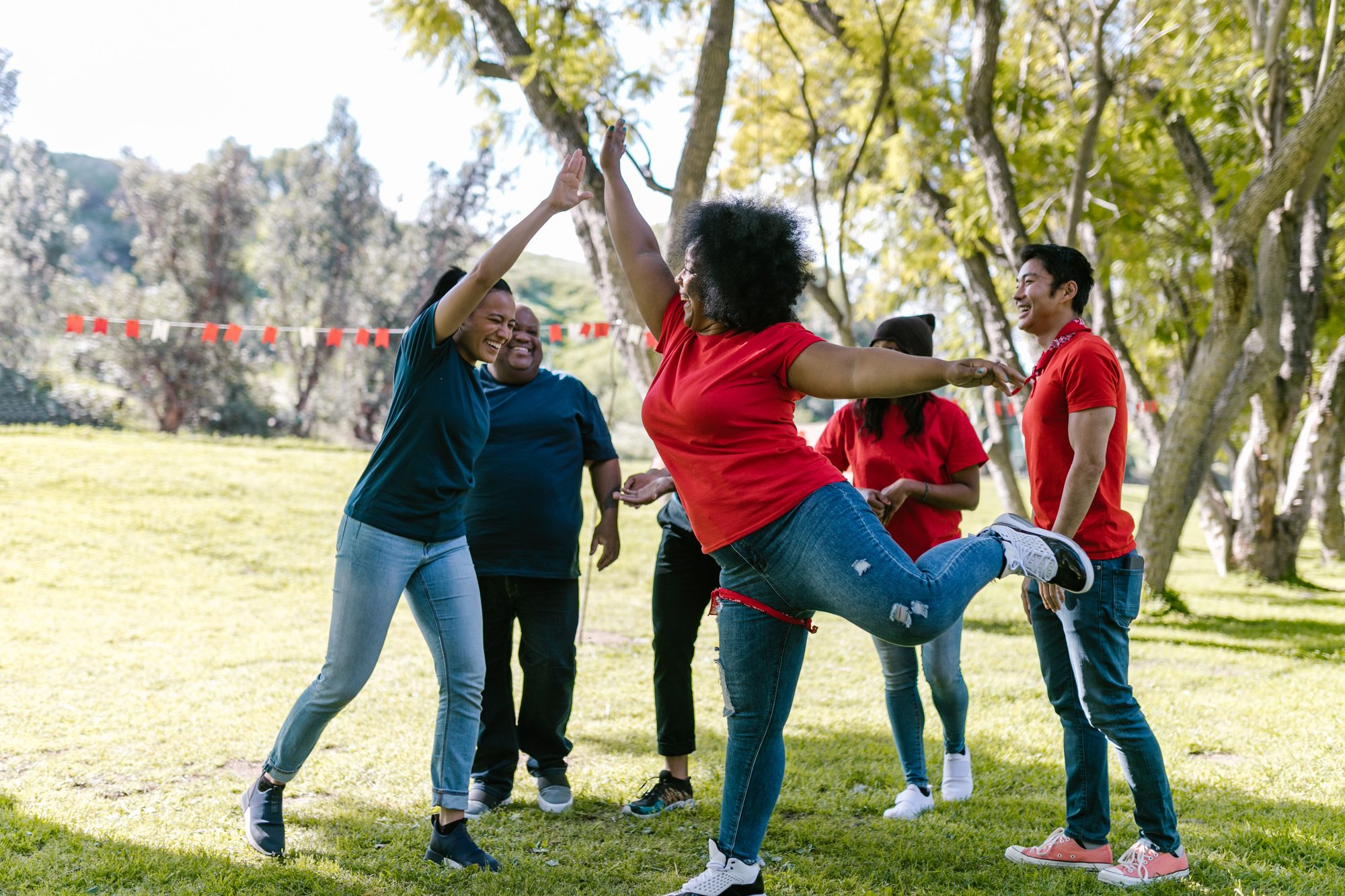
Planning a Team-Building Day in Kenya
What to decide, in what order, before anyone books a venue. Written from the operational side of the table.
Start with the outcome, not the activity.
The most common planning mistake is choosing the activity first. Tug of war, obstacle courses and quiz stations are tools; none of them is a goal. Before anything is booked, the organiser should be able to finish this sentence: "the team should leave this day having…"
The usual answers fall into four groups, and each points to a different kind of day. Cohesion after growth, a merger or remote work suits mixed-team field games that force new working pairs. Onboarding a new cohort suits shorter, high-energy formats inside a longer induction agenda. Reward for a strong period points away from drills and toward a genuinely enjoyable day out, sometimes on the coast. Strategy offsites need the reverse balance: a working session first, an afternoon programme to close.
Settle the outcome and the activity list writes itself. Send it to us as one line in the brief; the programme we propose back will be built around it.
Let the headcount shape the format.
- Under 20 people: high-participation formats work best; problem-solving challenges, cooking competitions, structured debriefs. Everyone is involved in everything.
- 20 to 80 people: the rotating-station model; teams move between facilitated activities on a timed circuit, then converge for a finale. This is the workhorse format for most corporate groups.
- 80 and above: a field-day structure with parallel activities, scoreboards and a public finish. Logistics become the programme: staggered transport, marshalled registration and amplified coordination matter as much as the games.
Headcount also decides the transport plan. A single minibus keeps a small team on one schedule; large groups need a shuttle rotation timed so the programme never waits for a late vehicle. We plan the vehicle schedule as part of the event, not as an afterthought; see transfers & logistics.
Choose the setting after the format.
Open grounds near the city are the default for field games and station circuits: minimal travel time, maximum programme time, easy catering. They suit single-day events where the goal is energy and mixing.
Conference venues with grounds earn their keep when the day combines meetings and activities. Walking from a boardroom to a lawn beats moving a delegation across town in the middle of the day.
The coast turns a team day into a reward. Beach games, dhow excursions and a shared dinner do different work than an obstacle course; they are worth the travel when the outcome is appreciation rather than training. Coastal programmes usually justify an overnight, which changes the budget structure but often returns more per shilling in goodwill.
One planning rule holds everywhere: book the programme before the venue. A venue chosen first tends to dictate a programme that fits the lawn rather than the objective.
The anatomy of a day that works.
- Arrival and tea: a fixed, unhurried start. The programme clock starts when the last vehicle arrives, which is why the transport plan matters.
- Energisers: twenty to thirty minutes of low-stakes warm-up that breaks the office hierarchy before the main programme.
- Main programme, block one: the core activities, run to a visible schedule.
- Lunch: generous and unrushed; this is where the mixing the morning created actually settles in.
- Main programme, block two: shorter than the morning. Energy after lunch is real but finite.
- Finale and debrief: a competitive close, recognition, and a short, honest debrief that connects the day back to the outcome it was booked for.
The pattern to avoid is the overstuffed agenda. A day with four well-run activities lands better than one with eight rushed ones.
What actually drives the budget.
Team-building costs are built from a short list of drivers, and knowing them makes any quote easy to compare:
- Headcount: catering and facilitation scale with people; venue and transport scale in steps.
- Venue and exclusivity: shared grounds cost less than exclusive use; exclusive use buys privacy and schedule control.
- Distance: travel time is paid twice, in vehicles and in programme hours.
- Facilitation depth: games marshalled by a crew cost less than programmes designed and debriefed by professional facilitators; which one you need depends on the outcome, not the group's seniority.
- Day trip or overnight: accommodation changes the structure of the cost more than any other single decision.
We quote each programme individually against these drivers, itemised, so nothing is discovered at the venue. Send the outcome, the headcount and a date range, and the proposal comes back with the trade-offs stated plainly.
Planning FAQ
- How far ahead should we book? Two to three weeks for groups under thirty; four to six for large groups, end-of-year dates, or programmes attached to a conference.
- Can it combine with a conference? Yes, and it usually should; a half-day programme around conference sessions costs less than a separate day and does the same work. One schedule, one invoice.
- What if it rains? Every programme we propose carries a wet-weather variant agreed in advance, so the decision on the morning is a switch, not a scramble.
- Do you handle transport? Yes; the shuttle plan is part of the programme design, sized to the group and timed to the agenda.